AI Deciphers 2,000-Year-Old Charred Scrolls from Herculaneum
AI Deciphers 2,000-Year-Old Charred Scrolls from Herculaneum
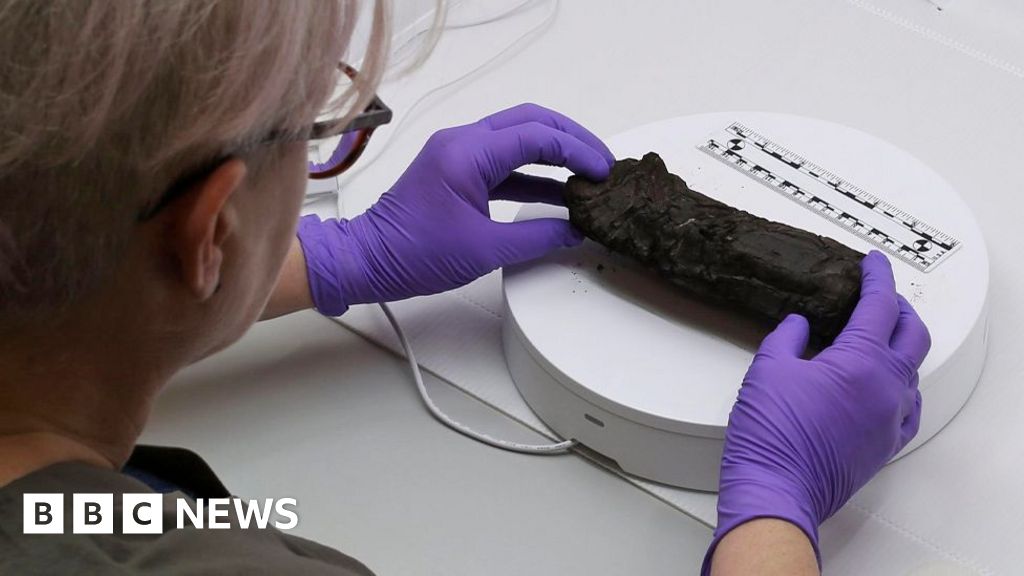
Researchers have used artificial intelligence (AI) to read a 2,000-year-old scroll that was charred in the eruption of Mount Vesuvius in 79 AD. The scroll, part of the Herculaneum papyri, was found in the ancient Roman town of Herculaneum, which, like Pompeii, was buried under volcanic ash. These scrolls, made from papyrus, have been extremely fragile and difficult to read due to their carbonized state.
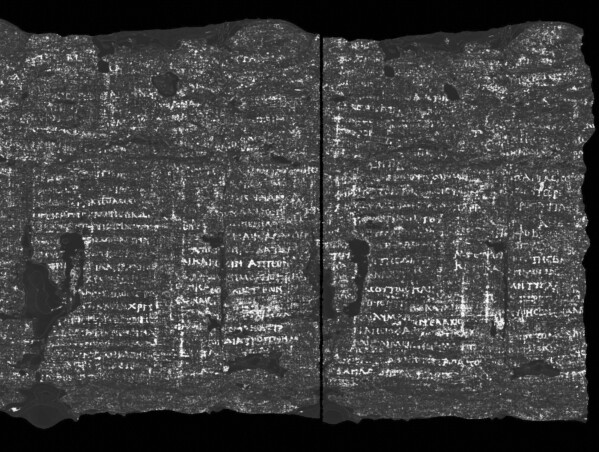
A team of researchers, including Youssef Nader, Luke Farritor, and Julian Schilliger, won a $700,000 prize for their work in the "Vesuvius Challenge," an international competition aimed at unlocking the contents of these ancient scrolls. They used high-resolution CT scans and AI to distinguish ink from papyrus and to decipher the faint and almost unreadable Greek lettering.
The team's efforts have already revealed some of the text, with some letters and words becoming visible. The scroll is believed to be a work of philosophy, possibly written by the Epicurean philosopher Philodemus, discussing topics such as music, food, and the enjoyment of life's pleasures. The challenge required researchers to decipher four passages of at least 140 characters, with at least 85 percent of the characters recoverable. So far, about five percent of the scroll has been decrypted.
The potential impact of this breakthrough is significant, as it could provide new insights into the ancient world and rewrite the history of key periods. The Herculaneum papyri are the only known library from ancient Roman times, and only an estimated 3 to 5 percent of ancient Greek texts have survived. The next phase of the competition aims to unlock 85 percent of the scroll, which could reveal even more valuable information.
 Invite Gmail Contacts