
Optimizing Rust Compile Times for Large-Scale Projects
April 18, 2025
Rust
Compile Times
Dependency Graph
Incremental Compilation
Parallelization
Linkers
Proc Macros
Profiling
This article explores strategies for optimizing Rust compile times in projects with thousands of crates, focusing on crate size, dependency graph optimization, build tools, and parallelization techniques.
Optimizing Rust Compile Times for Large-Scale Projects
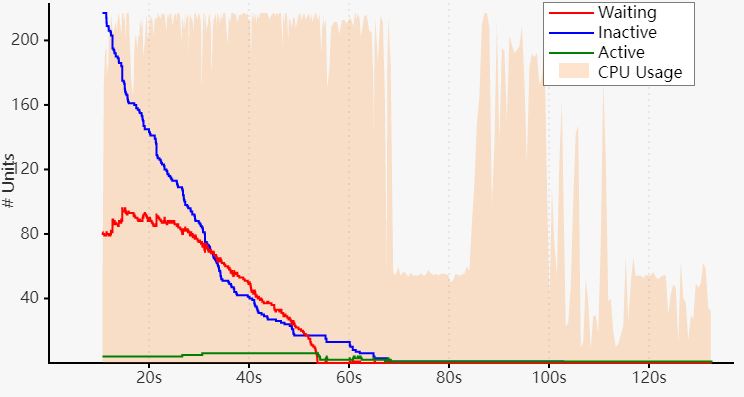
Optimizing Rust compile times for projects with thousands of crates involves addressing several key factors:
- Crate Size and Splitting: While splitting crates into smaller units can improve parallelism, excessively small crates (e.g., 1000 LOC or less) may introduce overhead in dependency management and linking. Instead, focus on splitting crates along logical API boundaries rather than arbitrary size limits. This approach balances parallelism with maintainability.
- Dependency Graph Optimization: Long dependency chains can significantly slow down compilation. Minimize the depth of your dependency graph by reducing unnecessary dependencies and flattening the structure where possible. Tools like
cargo build --timingscan help identify bottlenecks. - Linker and Build Tools: Use fast linkers like
moldorlldto reduce linking time. Additionally, consider enablingLTO (Link-Time Optimization)selectively, as it can improve runtime performance but may increase compile times. - Incremental Compilation: Leverage Rust's incremental compilation feature to avoid recompiling unchanged code. This is particularly effective in large projects where only a subset of crates changes frequently.
- Proc Macros and Codegen: Procedural macros and extensive code generation can be major compile-time bottlenecks. Optimize or limit their use where possible, and consider pre-compiling macro-heavy dependencies.
- Parallelization: Ensure your build system is fully utilizing available CPU cores. Tools like
BazelwithRemote Build Execution (RBE)andRemote Cachecan distribute builds across a cluster, significantly reducing compile times for large projects. - Vendoring Dependencies: Pre-compile and vendor dependencies to avoid repeated downloads and builds. This also ensures consistent builds and avoids issues with dependency changes.
- Profiling: Use Rust's self-profiling tools (
-Zself-profile) to identify specific bottlenecks in the compilation process. This can guide targeted optimizations.
For projects with thousands of crates, a combination of these strategies—along with careful monitoring and iterative optimization—can lead to significant improvements in compile times.
Sources
Compile Rust dependencies independently for large projects?
I have a large Rust project (11M LoC across 14K crates) that is compiling slowly. I have already asked for and received advice (Reddit - Dive into anything)
Why are most crates > 1000 LOC? - Rust Users Forum
One of the reasons many smaller crates improves compile time is because it breaks the code into smaller chunks for the optimizer to consider at a time.
Rust Compile Times and Code Graphs - Hacker News
I really dislike the need to artificial decompose crates in this way. If Rust could accurately track dependencies at a more fine-grained ...
 Invite Gmail Contacts