
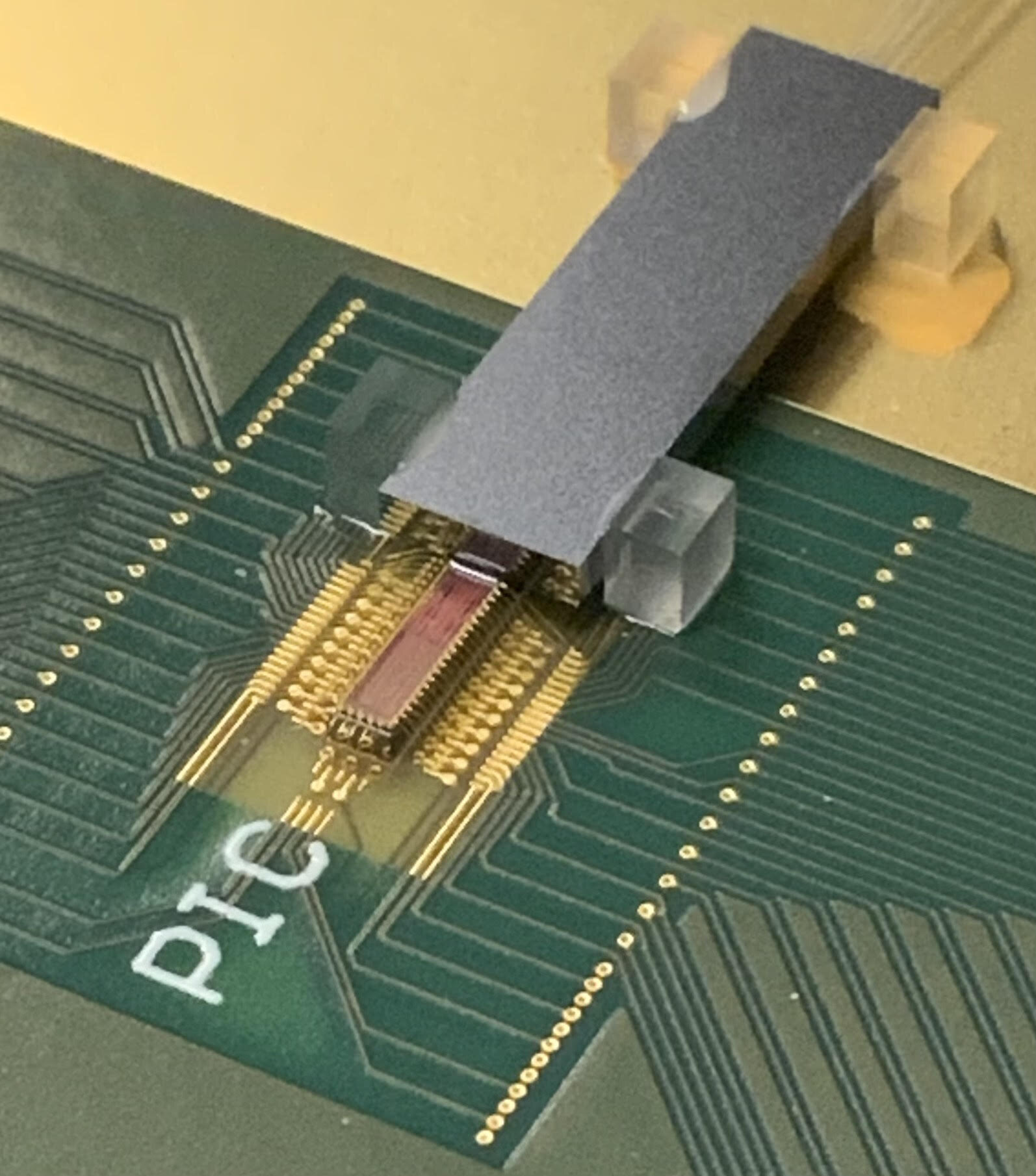
Photonic Chips Outperform Electronic Chips in Speed, Efficiency, and Scalability
Photonic Chips vs Electronic Chips: A Performance Comparison
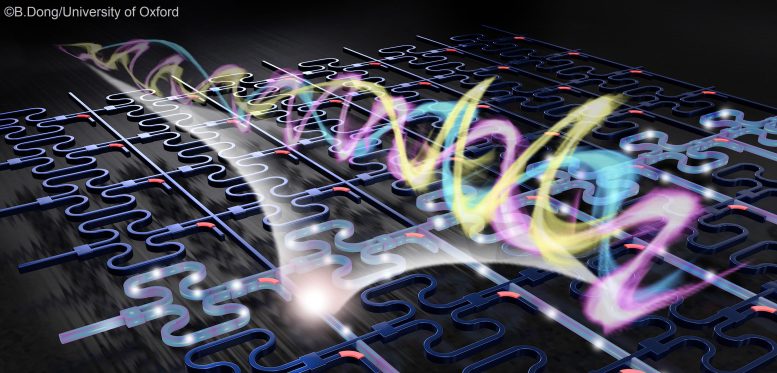
Photonic chips, which use photons (light) instead of electrons for data processing, are emerging as a transformative technology in computing, particularly for artificial intelligence (AI) and high-performance computing applications. Here’s a detailed comparison of their performance against traditional electronic chips:
1. Speed and Bandwidth
Photonic chips excel in speed and bandwidth. For instance, researchers at Columbia Engineering demonstrated a photonic chip capable of transmitting 16 gigabits per second per wavelength across 32 distinct wavelengths, achieving a total bandwidth of 512 Gb/s. This is significantly higher than the data transfer rates of electronic chips, which are limited by the bandwidth bottleneck caused by electrical signal dissipation in metal wires.
2. Energy Efficiency
Photonic chips are far more energy-efficient. Traditional electronic systems waste energy converting electrical signals to optical signals and back for data transfer over fiber-optic cables. Photonic chips, using wavelength-division multiplexing (WDM) and Kerr frequency combs, eliminate this inefficiency by directly generating and transmitting multiple wavelengths of light. This reduces energy consumption and heat generation, making them ideal for large-scale AI applications.
3. Scalability
Photonic chips are highly scalable. The Columbia Engineering team’s photonic chips, measuring just a few millimeters, can be fabricated using standard CMOS foundries, the same facilities used for microelectronics chips. This allows for cost-effective mass production and integration with existing electronic systems. Additionally, the architecture supports scaling to over 100 wavelength channels, further enhancing their potential.
4. Latency
Photonic chips offer ultra-low latency, which is critical for real-time AI applications. The integration of photonic and electronic components on a single chip minimizes the distance electrical signals must travel, reducing delays. This is particularly advantageous for tasks like neural network processing and heuristic problem-solving.
5. Current Limitations
Despite their advantages, photonic chips face challenges. Scaling up the number of photonic components while managing noise and non-linearities in silicon photonics remains a hurdle. Additionally, while photonic chips are competitive in certain AI tasks, they still lag behind electronic solutions in others, such as transformer models.
Conclusion
Photonic chips represent a significant leap forward in computing performance, offering higher speeds, greater energy efficiency, and scalability compared to traditional electronic chips. While challenges remain, ongoing research and development are paving the way for their widespread adoption in AI and high-performance computing.
 Invite Gmail Contacts