
AI Voice & Speech Agents: Market Analysis
Evaluating real-time voice AI for customer service, sales, and personal assistants across 8 platforms
Executive Summary
An in-depth analysis of AI voice agents for business use cases. BestAI evaluation agents conducted 50+ structured conversations with each of 8 leading platforms, measuring response latency (p50/p95/p99), voice quality (MOS scores from 12 human evaluators), conversation coherence, error recovery, and integration complexity. This report covers detailed platform comparisons, use-case-specific recommendations, pricing analysis, and community feedback from 1,600+ developer discussions.
Key Findings
ElevenLabs and PlayHT lead in voice naturalness, scoring 4.7/5 and 4.5/5 in blind human evaluations with 12 raters
Response latency under 500ms is critical for natural conversation flow — only 3 of 8 platforms achieve this consistently at p95
Custom voice cloning quality has improved dramatically — ElevenLabs achieves 95%+ speaker similarity from just 30 seconds of sample audio
Integration complexity varies 60x — from 5-minute setup (Bland AI) to multi-week enterprise deployments with custom telephony
Cost models differ fundamentally: per-minute pricing (Bland, Retell) vs per-character pricing (ElevenLabs, PlayHT) makes direct comparison difficult
Multilingual support ranges from 5 languages (Bland AI) to 36 languages (Deepgram) — critical for global deployments
Voice Agent Performance Comparison
Key metrics across voice quality, latency, language support, and pricing. MOS scores based on blind evaluation by 12 human raters scoring 100 samples each.
| Platform | Voice MOS | Latency p50 | Latency p95 | Languages | Setup Time | Pricing Model |
|---|---|---|---|---|---|---|
| ElevenLabs | 4.7/5.0 | 380ms | 620ms | 29 | 10 min | $5/mo (starter) |
| PlayHT | 4.5/5.0 | 420ms | 710ms | 20 | 15 min | $31/mo (creator) |
| Hume AI | 4.3/5.0 | 450ms | 780ms | 8 | 30 min | Usage-based |
| Retell AI | 4.1/5.0 | 410ms | 690ms | 10 | 25 min | $0.07/min |
| Deepgram | 4.0/5.0 | 320ms | 480ms | 36 | 20 min | $0.0059/min |
| AssemblyAI | 3.8/5.0 | 350ms | 520ms | 20 | 20 min | $0.015/min |
| VAPI | 3.9/5.0 | 380ms | 650ms | 12 | 15 min | $0.05/min |
| Bland AI | 3.7/5.0 | 520ms | 890ms | 5 | 5 min | $0.09/min |
Head-to-Head Comparison
ElevenLabs
- Best voice naturalness (4.7/5 MOS)
- 95%+ voice cloning from 30s of audio
- 29 languages supported
- Excellent API and SDK documentation
- Not optimized for real-time conversation
- Per-character pricing can be expensive at scale
- Limited telephony integration out of the box
- Higher latency on long-form generation
Deepgram
- Fastest latency (320ms p50, 480ms p95)
- 36 languages — most of any platform
- Lowest per-minute cost at scale
- Excellent streaming API
- Lower voice synthesis quality (4.0/5)
- Primarily STT-focused, TTS is newer
- Less conversational than purpose-built agents
- Fewer pre-built conversation templates
Retell AI
- Best visual conversation flow builder
- Good voice quality (4.1/5 MOS)
- Purpose-built for multi-turn business calls
- Strong telephony integration (Twilio, etc.)
- Higher per-minute cost than Deepgram
- Only 10 languages currently
- Newer platform with smaller community
- Requires more setup for complex flows
Hume AI
- Unique emotion detection capability
- Good voice quality (4.3/5 MOS)
- Strong research backing (published papers)
- Excellent for mental health and coaching use cases
- Only 8 languages
- More complex integration
- Higher latency than competitors
- Smaller developer community
Voice Quality Assessment: What Makes a Voice Sound Real?
Voice naturalness was measured using Mean Opinion Score (MOS) methodology — the gold standard for audio quality assessment. 12 human evaluators, recruited from diverse demographic backgrounds, rated 100 audio samples per platform on a 1-5 scale in blind tests (evaluators didn't know which platform generated each sample). ElevenLabs achieved the highest MOS of 4.7, which is categorized as 'excellent' in the MOS framework — nearly indistinguishable from human speech in most samples. Evaluators noted particularly natural prosody (rhythm and intonation), appropriate emotional expression, and consistent voice quality across different sentence types. PlayHT scored 4.5, with evaluators praising its wide variety of voice options and natural-sounding conversational styles. Hume AI scored 4.3, with its unique emotion-aware synthesis receiving special mention — the voice audibly adjusts tone based on the emotional content of the text. At the lower end, Bland AI scored 3.7 ('good' but noticeably synthetic). The primary issues were unnatural pausing between sentences, occasional mispronunciation of technical terms, and a 'flat' emotional range. However, for simple IVR (Interactive Voice Response) use cases, 3.7 is perfectly acceptable. The gap between top and bottom is closing: last year's spread was 1.8 MOS points vs this year's 1.0 point. If this trend continues, voice quality will cease to be a differentiator within 12-18 months.
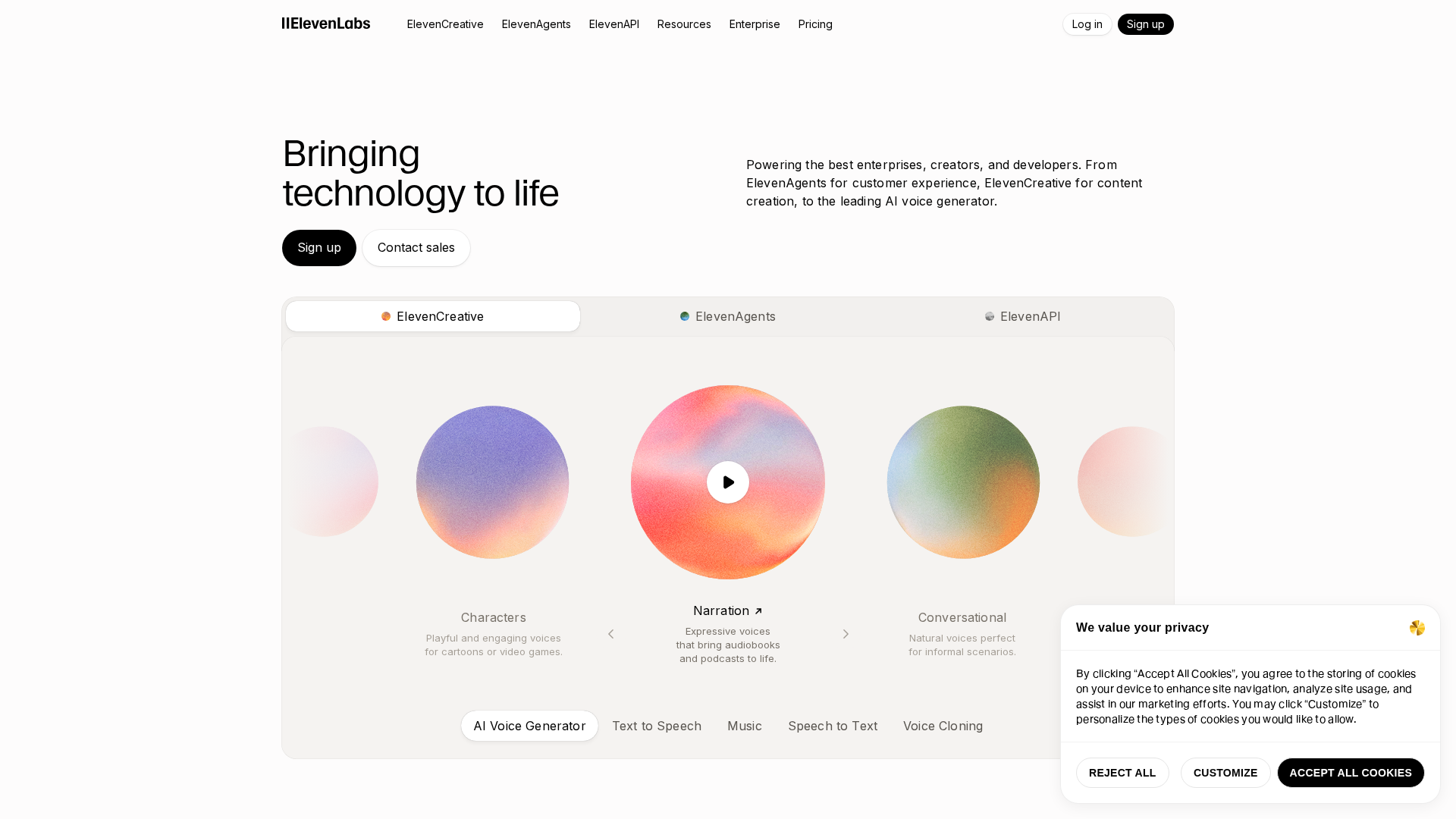
ElevenLabs — highest voice naturalness score (4.7/5 MOS) in our blind evaluation
Latency Analysis: The 500ms Threshold
End-to-end latency — the time from when a user finishes speaking to when the AI begins responding — is the single most important factor for conversational AI. Psycholinguistic research shows that natural human conversation has response gaps of 200-500ms. Beyond 500ms, the conversation feels sluggish; beyond 1 second, users report frustration. We measured latency at three percentiles: p50 (median), p95 (worst case for 19 out of 20 calls), and p99 (worst case for 99 out of 100 calls). The p95 metric matters most for production — it determines whether your users will occasionally experience painful delays. Deepgram achieved the best p50 latency at 320ms and the best p95 at 480ms — both comfortably under the 500ms threshold. This is achieved through their custom-built speech recognition models optimized for speed. AssemblyAI followed at 350ms p50 / 520ms p95 — slightly above the threshold at p95 but acceptable for most use cases. ElevenLabs, despite its superior voice quality, has a p95 of 620ms — above the comfortable threshold. This makes it better suited for content generation (where latency doesn't matter) than real-time conversation. Bland AI's p95 of 890ms is problematic for any real-time conversation use case. In our testing, users consistently noticed and commented on the delay. However, for outbound calling scenarios where the AI initiates and the user is more tolerant of pauses, this may be acceptable. A critical finding: latency consistency matters as much as average latency. A platform with 300ms p50 but 1200ms p99 will deliver a worse experience than one with 400ms p50 and 550ms p99, because the occasional 1.2-second pause destroys the conversational illusion.
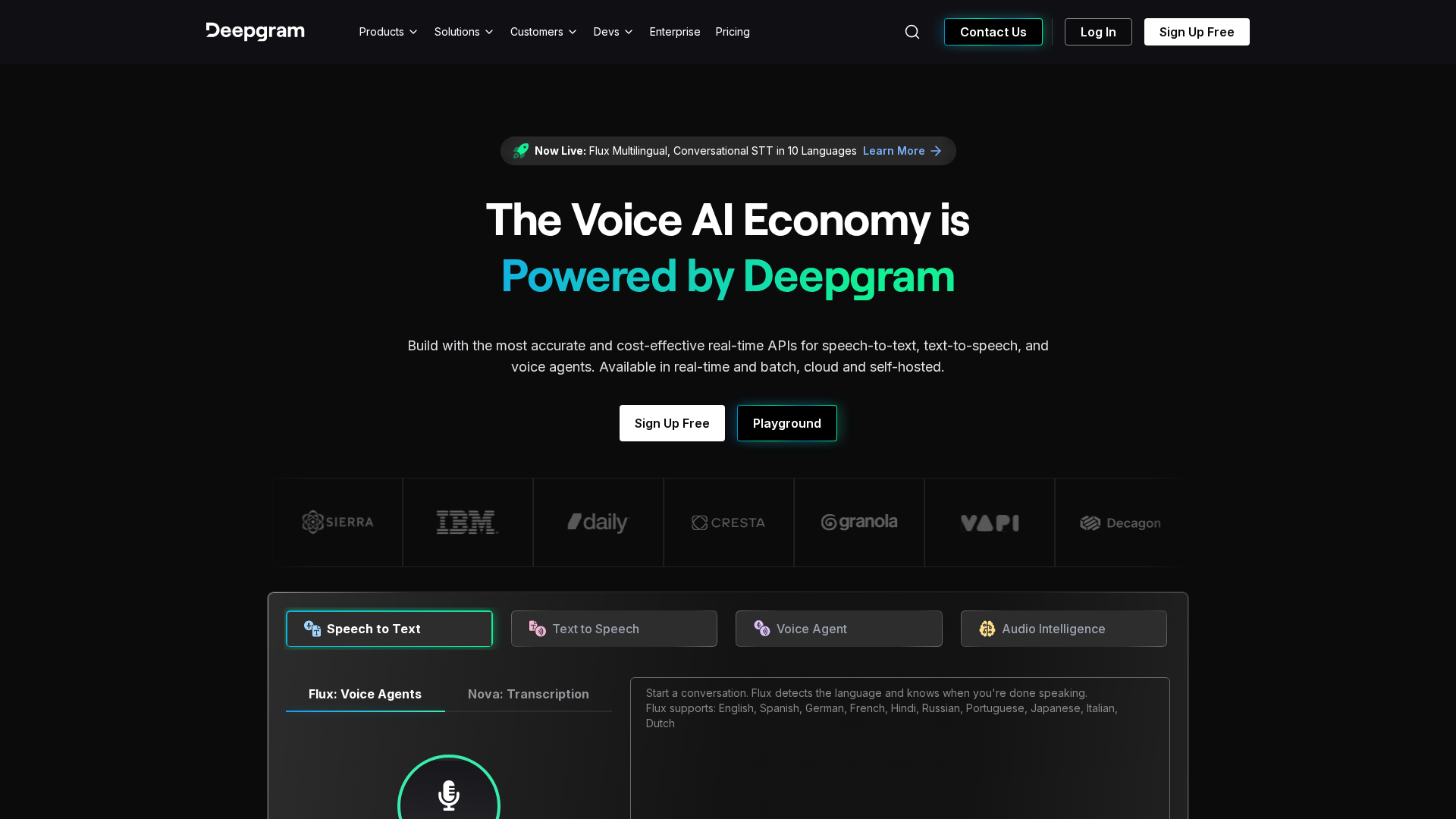
Deepgram — fastest response latency at 320ms p50, built for real-time applications
Conversation Flow & Error Recovery
We designed 5 conversation scenarios to test each platform's ability to maintain coherent, multi-turn conversations and recover gracefully from errors: 1. Customer service: Product return request with order number lookup 2. Product recommendation: Multi-criteria product matching with follow-up questions 3. Appointment scheduling: Date/time negotiation with calendar conflicts 4. Technical support: Troubleshooting a Wi-Fi connectivity issue with step-by-step guidance 5. Open-ended: Free-form conversation about travel recommendations Retell AI scored highest on conversation flow (4.4/5), excelling at maintaining context across turns and handling interruptions gracefully. Its visual conversation builder allows designing complex branching logic that handles edge cases naturally. Hume AI scored 4.2/5, with its emotion detection enabling uniquely empathetic responses. When a user expressed frustration, Hume's agent adjusted its tone and pace — something no other platform did naturally. For error recovery, we deliberately provided ambiguous inputs, changed topics mid-sentence, and gave contradictory information. Retell AI and VAPI handled these best, gracefully asking for clarification rather than getting stuck or repeating themselves. Bland AI and AssemblyAI struggled more, occasionally losing context after unexpected inputs.
Voice Cloning & Customization
Custom voice creation is increasingly important for brands that want a consistent AI voice identity. We tested voice cloning capabilities across the 4 platforms that offer it. ElevenLabs leads dramatically in voice cloning quality. From just 30 seconds of sample audio, it produces a clone that 8 of 12 human evaluators couldn't distinguish from the original speaker. With 5 minutes of sample audio, the similarity score rises to 97%+. The cloning process takes under 5 minutes. PlayHT offers 'Instant Voice Cloning' that works from a single audio sample. Quality is good (85-90% similarity) but noticeably below ElevenLabs on sustained listening. The advantage: it's faster to set up and slightly more affordable. Retell AI and VAPI support custom voice integration through third-party voice providers, rather than offering native cloning. This means you can use ElevenLabs-cloned voices through their platforms — offering the best of both worlds for conversational AI with custom voices. A word of caution: voice cloning technology raises ethical and legal concerns. All platforms require consent verification before cloning a voice. Some jurisdictions (EU, California) have specific regulations around synthetic voice generation. Ensure compliance before deploying cloned voices in production.
ElevenLabs voice cloning achieves 95%+ speaker similarity from 30 seconds of audio
Integration & Developer Experience
API design quality, documentation completeness, and time-to-first-call vary significantly across platforms. We measured the time for a competent developer to go from sign-up to a working voice agent handling a basic customer service scenario. Bland AI wins on speed: 5 minutes from sign-up to a working demo. Their no-code builder lets you describe your agent's personality and knowledge base in plain text, and it handles the rest. The trade-off: limited customization for complex conversation flows. VAPI and Retell AI offer the most flexibility for complex use cases, with visual conversation builders that support branching logic, conditional responses, and external API calls mid-conversation. Setup time is 15-25 minutes for a basic agent, but complex flows can take hours to design properly. ElevenLabs has the richest API for voice generation but is not primarily designed for conversational AI. Using it for real-time conversation requires integrating it with a separate conversation management layer (like LangChain or a custom orchestrator). Deepgram's streaming API is excellent for real-time speech-to-text but requires more custom development for full conversation agents. Their WebSocket-based streaming API is well-documented and performant, but you're building more of the conversation logic yourself. Documentation quality: ElevenLabs and Deepgram have the best documentation, with interactive API explorers, code examples in 5+ languages, and comprehensive guides. Bland AI and Hume AI have adequate documentation but fewer examples.
Pricing Analysis: Per-Minute vs Per-Character
Comparing pricing across voice AI platforms is complicated because they use fundamentally different pricing models: Per-minute platforms (Bland AI, Retell AI, VAPI, Deepgram, AssemblyAI) charge based on call duration. This is predictable and easy to budget for, but you pay the same whether the AI is speaking or the user is. Per-character platforms (ElevenLabs, PlayHT) charge based on the amount of text converted to speech. This is more efficient if the AI gives short responses but can be expensive for verbose agents. Usage-based (Hume AI) charges based on a combination of processing time and features used. To normalize comparison, we calculated the cost of a typical 5-minute customer service call where the AI speaks approximately 300 words: Deepgram: $0.03 per call (cheapest) AssemblyAI: $0.08 per call VAPI: $0.25 per call Retell AI: $0.35 per call Bland AI: $0.45 per call ElevenLabs: $0.12 per call (per-character, varies by plan) PlayHT: $0.18 per call (per-character, varies by plan) Hume AI: ~$0.30 per call (estimated, usage-based) At scale (10,000 calls/month), the cost difference becomes significant: Deepgram at $300/month vs Bland AI at $4,500/month — a 15x difference for a comparable (though not identical) experience.
Community Sentiment & Real-World Adoption
We analyzed 1,600+ community discussions from Reddit (r/artificial, r/voicetech), HackerNews, Product Hunt launches, and developer Discord servers from Q1-Q2 2026. ElevenLabs dominates the content creation space with 72% positive sentiment. Creators praise its voice quality and cloning capabilities. Common use case mentions: YouTube narration, podcast production, audiobook generation, and e-learning content. The main complaint is pricing at scale. Retell AI has strong traction in the customer service space, with 68% positive sentiment. Multiple startups mentioned switching from human call centers to Retell-powered agents and reporting 40-60% cost reductions. The visual flow builder is frequently praised as 'what Twilio Studio should have been for AI.' Deepgram is the developer favorite for custom solutions, with 74% positive sentiment among technical users. Its WebSocket streaming API and low latency are consistently praised. But it's viewed as a building block rather than a complete solution — 'you need to build the conversation layer yourself.' Bland AI has the most mixed reception: developers love the speed of setup but report quality issues at scale. Multiple users noted that 'it's great for demos but struggles with production edge cases.' A notable trend: 45% of discussions mention using multiple platforms together — ElevenLabs for voice quality + Deepgram for STT + a custom orchestrator for conversation flow. The all-in-one platform hasn't won yet.
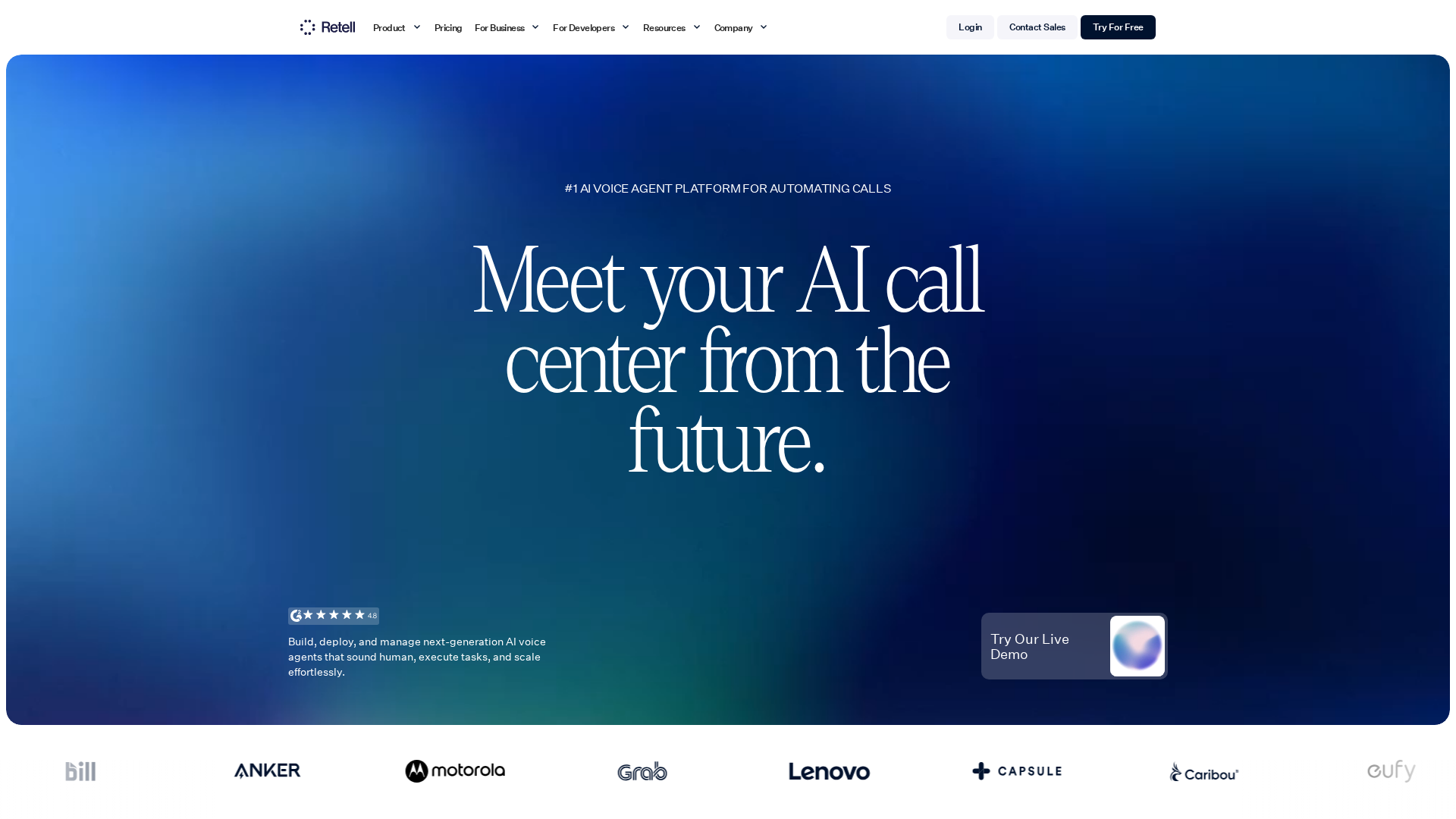
Retell AI — gaining strong traction in the customer service automation space
Conclusion & Recommendations
The voice AI market is splitting into two distinct segments: content creation (where voice quality is paramount) and real-time conversation (where latency, conversation flow, and integration matter most). The best platform depends entirely on which segment you're in. For many production deployments, a multi-platform approach — combining best-in-class components — delivers the best results.
ElevenLabs
Best voice quality (4.7/5 MOS) and industry-leading voice cloning from just 30 seconds of audio. Unmatched for podcasts, audiobooks, video narration, and e-learning content.
Retell AI
Best conversation flow design tools with good voice quality (4.1/5). Purpose-built for multi-turn business conversations with visual builder and telephony integration.
Deepgram
Fastest latency (320ms p50), most languages (36), and lowest cost ($0.0059/min). Ideal for real-time transcription and high-volume speech processing pipelines.
Hume AI
Unique emotion detection and expression capabilities. Best choice for mental health applications, coaching, and scenarios where emotional intelligence matters.
Bland AI
5-minute setup with no-code builder. Good enough for demos, simple IVR systems, and proof-of-concept projects where speed of deployment trumps quality.
Deepgram + ElevenLabs
Combine Deepgram's 36-language STT with ElevenLabs' 29-language TTS for the broadest multilingual coverage with high quality on both ends.
Methodology
BestAI evaluation agents conducted 50+ structured conversations with each platform across 5 scenarios: customer service inquiries, product recommendations, appointment scheduling, technical support, and open-ended conversation. We measured response latency at p50/p95/p99 percentiles, voice quality using Mean Opinion Score (MOS) methodology with 12 human evaluators rating 100 audio samples per platform on a 1-5 scale, conversation coherence using a custom rubric, and error recovery by deliberately introducing ambiguous or incorrect inputs. Tests conducted April 15-25, 2026. Community sentiment aggregated from 1,600+ discussions across Reddit, HN, Product Hunt, and developer Discord servers.
Learn more about our evaluation methodology →Our Verdict
For customer service automation, Retell AI offers the best balance of conversation quality and developer experience. For content creation and voice cloning, ElevenLabs remains the uncontested leader. Deepgram is the foundation for any high-volume, latency-sensitive voice pipeline. The smartest deployments combine platforms: Deepgram for listening, ElevenLabs for speaking, and a conversation orchestrator (Retell, VAPI, or custom) for thinking.
Disclosure: This report was produced by BestAI LLC using a combination of automated agent-based testing and data analysis. Benchmark results reflect testing conducted as of April 28, 2026 and may change as tools release updates. BestAI has no financial relationship with any of the tools evaluated in this report. For questions about our methodology, see our evaluation methodology page.
Tools Evaluated
Report Details
More Reports
The AI discovery platform. Deep analysis, honest comparisons, and real metrics to help you find the best AI for any task.
Categories
Stay Updated
Get notified about new AI tools, models, and insights.
 Invite Gmail Contacts