
All Frameworks Complete list of AI frameworks, sorted by newest first
Torch-MLU is an open-source PyTorch device backend extension plugin developed by Cambricon, allowing developers to use Cambricon MLU series intelligent acceleration cards as a backend for PyTorch. The plugin provides native support for PyTorch, enabling developers to seamlessly migrate GPU-based deep learning models to Cambricon MLU hardware, improving model training and inference efficiency. Torch-MLU's open-source nature further promotes the co-construction of the AI ecosystem, offering a more flexible and efficient development environment for global developers.
ai-chatbot is an open-source project by Vercel, built on the Next.js framework and Vercel AI SDK. It offers a fully functional and easily customizable AI chatbot template, enabling developers to quickly build high-performance chat applications with excellent user experience. The project integrates cutting-edge technologies, supports multiple large language models, and offers flexible model switching capabilities, along with outstanding UI design and data management features. ai-chatbot is suitable for various scenarios such as online customer service and social interaction, enhancing customer service efficiency and user engagement.
AgileGen is a generative software development framework designed to streamline the software creation process by fostering human-AI collaboration. It automates code and prototype generation, ensuring that the final product aligns with user requirements. The framework uses the Gherkin language to design and confirm user stories and acceptance criteria, collects user decisions through an interactive system, and supports iterative improvements based on feedback. AgileGen is ideal for startups, non-technical users, and educational environments, offering a rapid and efficient approach to software development.

Genesis is an open-source generative physics engine developed by Carnegie Mellon University, University of Maryland, Stanford University, MIT, and other research institutions. It simulates a wide range of physical phenomena, including object motion, character actions, and robot strategies. The engine features high physical accuracy, fast simulation speed (approximately 430,000 times faster than real-time), and a user-friendly Python-based design. Genesis supports various materials and physical phenomena, providing a lightweight, ultra-fast robot simulation platform and a powerful, fast photorealistic rendering system. It converts natural language descriptions into data patterns for use in generative data engines, making it ideal for general robotics, embodied AI, and physical AI applications.
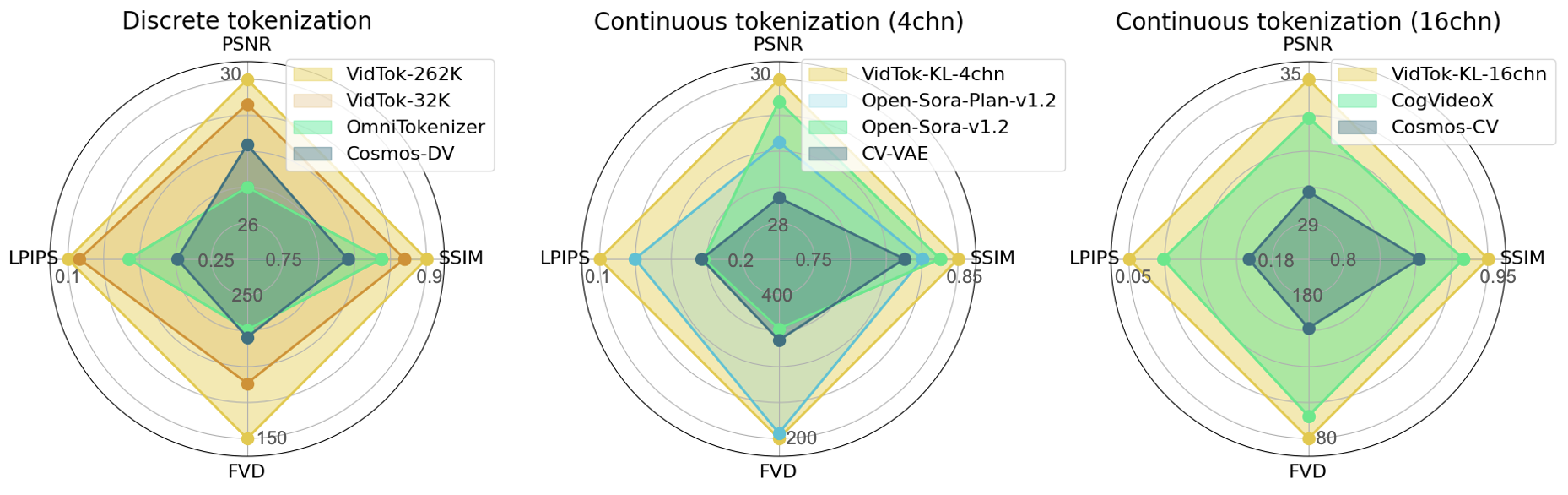
VidTok (Video Tokenizer) is an open-source, advanced video tokenizer developed by Microsoft. It efficiently converts video content into a series of "video tokens" using high-performance algorithms. It supports both continuous and discrete tokenization, offering flexible compression rates and diverse latent spaces, making it suitable for various application scenarios. VidTok employs a hybrid model architecture that combines convolutional layers and up/down-sampling modules to reduce computational complexity while maintaining high-quality reconstruction. It also introduces finite scalar quantization technology to address training instability and codebook collapse issues in traditional vector quantization.

Qwen-Agent is an open-source framework designed for developing intelligent agent applications using the Qwen model. It provides developers with tools to create agents capable of instruction following, tool usage, planning, and memory management. The framework supports advanced features like function calling, code interpretation, and Retrieval-Augmented Generation (RAG), allowing it to handle documents ranging from 8K to 1 million tokens. Qwen-Agent offers both atomic components for large models and tools, as well as advanced abstraction components for intelligent agents, making it easier to develop and deploy complex AI applications.
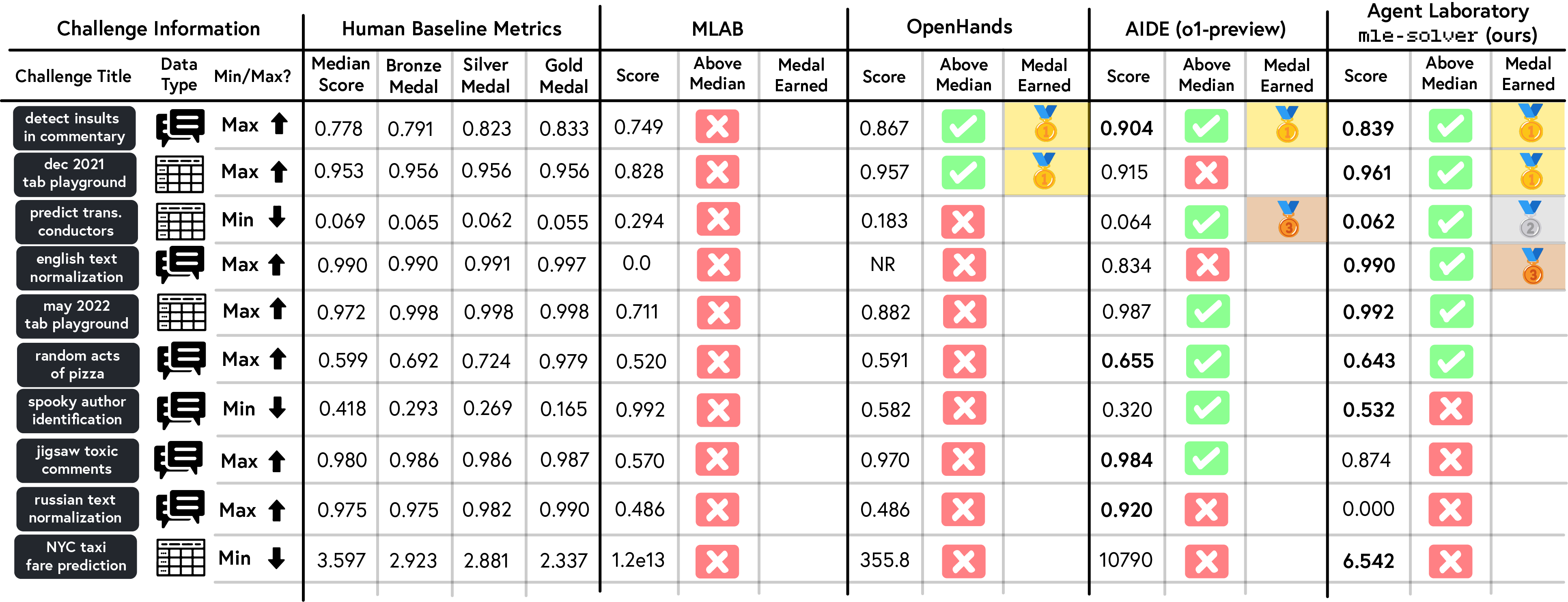
Agent Laboratory, developed by AMD and Johns Hopkins University, is an autonomous research framework leveraging large language models (LLMs) to streamline scientific research. It processes human-provided research ideas through three stages: literature review, experimentation, and report writing, producing comprehensive outputs like code repositories and research reports. The framework supports user feedback at each stage, enhancing research quality. Experimental results show an 84% reduction in research costs compared to previous methods. Performance varies across LLM backends, with o1-preview excelling in usefulness and report quality, and o1-mini in experimental quality.
KTransformers is an open-source framework developed by Tsinghua University's KVCache.AI team in collaboration with Qujing Technology. It optimizes the inference performance of large language models (LLMs) by leveraging GPU/CPU heterogeneous computing strategies and the sparsity of the MoE architecture. The framework supports running models with up to 671B parameters on a single GPU with only 24GB of VRAM, achieving preprocessing speeds of up to 286 tokens/s and inference generation speeds of up to 14 tokens/s. KTransformers employs advanced techniques such as offload strategies, high-performance operator optimization, CUDA Graph optimization, and 4bit quantization to significantly enhance inference speed and reduce hardware requirements.
DeepEP is an open-source Expert Parallel (EP) communication library developed by DeepSeek, specifically designed for training and inference of Mixture of Experts (MoE) models. It provides high-throughput and low-latency all-to-all GPU kernels, supporting both intra-node and inter-node NVLink and RDMA communications. DeepEP is optimized for the group-restricted gating algorithm, supports FP8 data format scheduling, and introduces a Hook-based communication-computation overlap method that does not occupy GPU computing resources. It is compatible with the Hopper GPU architecture and requires Python 3.8, CUDA 12.3, and PyTorch 2.1 or higher.
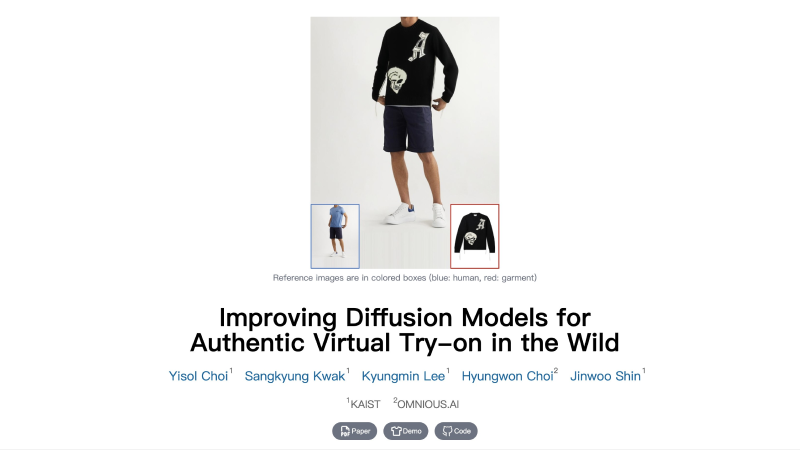
IDM-VTON (Improved Diffusion Models for Virtual Try-ON) is an open-source AI framework developed by researchers from the Korea Advanced Institute of Science and Technology and OMNIOUS.AI. It leverages advanced diffusion models to generate highly realistic virtual try-on images. The framework includes two key components: a visual encoder for extracting high-level semantic information from clothing images, and GarmentNet, a parallel UNet network for capturing low-level detail features. IDM-VTON also utilizes detailed text prompts to enhance the model's understanding of clothing features, resulting in more authentic and personalized try-on effects. It is particularly effective in real-world scenarios, making it a valuable tool for e-commerce, fashion retail, and social media applications.
Helping everyone find the best AI for their work and daily life through deep analysis and honest comparisons.
Categories
Stay Updated
Get notified about new AI tools, models, and insights.
 Invite Gmail Contacts